
Oats and Honey
by Greg Thorpe.
Introduction
Five artists, five drinking establishments, many stories and lives, rich histories, and a trail of art to bring it all together. That was the brief from Instigate Arts in celebration of the Salford Centenary – 100 years of the City of Salford – though of course the area’s history stretches far further into the past.
My name’s Greg Thorpe, I’m a writer, a curator, and a heritage researcher. The venue I was assigned was the beautiful Oats and Honey, 205 Monton Road – café, bar, shop, meeting place, sometimes quiet, sometimes boisterous, a perfect spot in the midst of Monton village.
On my first visit I don’t even have to pay to get on the bus because a nice lady slips me her ticket as she alights. ‘It’s good for an hour,’ she promises. ‘Enjoy!’ Perfect Salford welcome.
Over two lovely summer days I spoke to some of the patrons of Oats and Honey, and in between I delved into the history of the neighbourhood and the building itself.
This pamphlet brings together some of those discoveries, and forms part of the ‘Trails, Pales and Centenary Tales’ art trail that you can follow using the special map.
Thank you to everyone I spoke to, and the brilliant staff at Oats and Honey.
Enjoy reading!
Happy 100th to Salford.
Natalie, Liam & Mable.
‘Can you imagine living anywhere else?’
‘No. Except maybe abroad!’
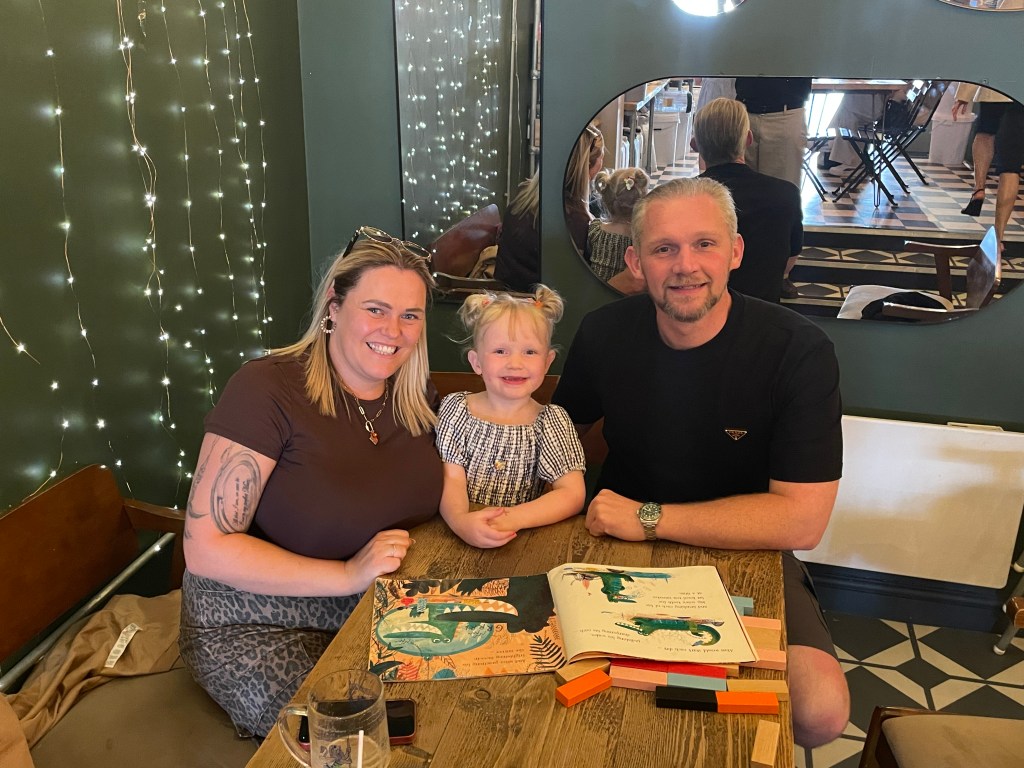
Mable loves music and books. (She’s reading about a ferocious crocodile when we meet). She attends a weekly music class just up the road from Oats & Honey, so her mum and dad, Natalie and Liam, have a new Friday night tradition where they all head for a treat and a game after collecting Mable from lessons. They are all proud Salfordians. Natalie and Liam first met back at school and have now made their family home in Salford. They are the first people I chat with, kind and friendly, and they get me out of my shy mode. But I make sure they finish their game of Jenga first, of course.
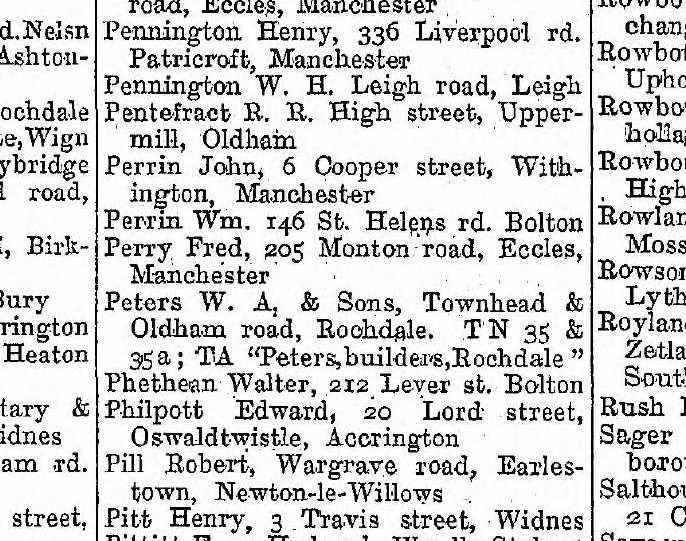
The original Fred Perry
It seems that 205 Monton Road always played a part in the village life of Monton. Before the renowned tennis star made the name ‘Fred Perry’ famous, there was another more humble Fred Perry, resident at 205 in the 1890s, who set up shop as a plumber and an ironmonger. The two trades often operated side by side, with ironmongers gradually evolving into something more like a DIY shop as we might recognise them today. This listing giving his address is taken from the helpfully named ‘1903 Salter’s Manchester, Salford & Suburban Directory’.
Andrew and John
‘Salford keeps dragging me back!’
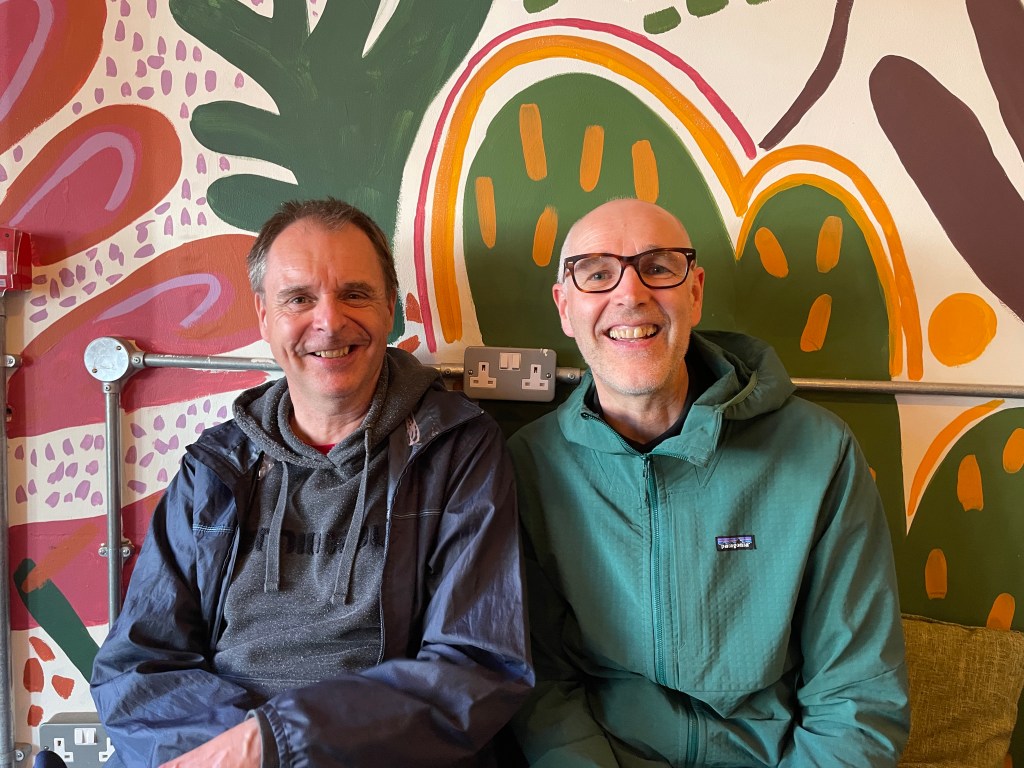
Andrew and John are longtime pals who met as students at the University of Salford back in 1983. (The year of the first Smiths single, if you need context – in other words, a very good year). Andrew originally hails from New Moston and his wife Jill, an artist, comes from Wigan. The Monton neighbourhood seemed the perfect handy halfway point between their families and workplaces when they moved here in 1993. Meanwhile, John’s son is a Salford Uni student himself now, studying gaming, echoing his Dad’s attachment to the city. ‘Salford keeps dragging me back!’ he jokes.John works in social housing and like many of us worries about the provision of decent opportunities for homes, a pertinent thought as we consider what has changed for people in Salford in the last 100 years. We all enjoy the music in Oats and Honey and now I’m enjoying seeing Jill’s stunning creative works on Instagram too. I’ve always said there is loads of talent and taste in this city.
A pilot passing through
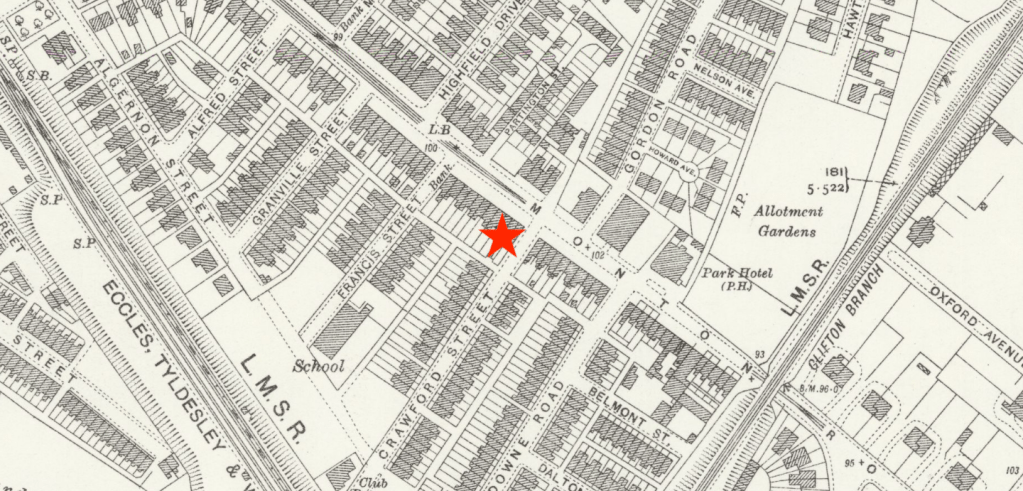
It seems Fred Perry’s ironmongery was enough of a successful business to be handed onto a successive owner, the pleasingly named Thomas Grove Dudfield Smith. Hailing from Gloucestershire, Smith married a Yorkshire lass but records don’t indicate how they wound up making their home in Salford. The ironmongery business at No. 205 went on hold as Smith joined first the RFC and then the RAF during the First World War. Smith thankfully survived the War and afterwards he and his wife relocated back to his home county of Gloucestershire, but he must have always remembered his Salford sojourn and the world-changing experiences that began for him there. The image here shows a map of the neighbourhood from between the World Wars with Number 205 Monton Road starred in red.
Necmi
‘I am from the most beautiful part of Türkiye.’
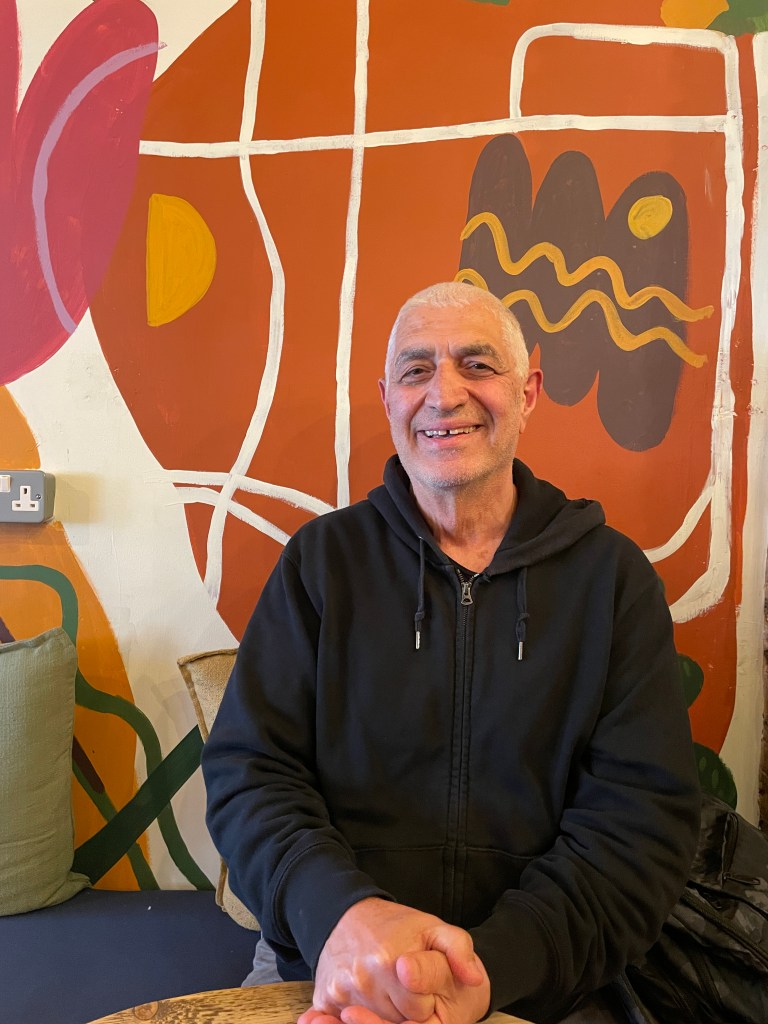
When I spot Necmi he is deep in concentration, headphones on, bopping away, and I guess correctly he’s working on some music. ‘I’ve been making music for years,’ he tells me. ‘Some of my work appeared on the soundtrack of a Leonardo DiCaprio film, but I think the music I’m making today is much better.’ As well as performing and releasing music under the name Oojami, Necmi is also a DJ and a creative producer, putting on shows and festivals, such as the global music outing, Sound Bazaar in Cheetham Hill. He appreciates that you can get a late-in-the-day coffee at Oats and Honey, and that its low key and comfy. Me too. ‘How did you find yourself here in Salford?’ I ask him. ‘‘That’s a good question!’ he says. ‘Life! I’m from the most beautiful part of Türkiye!” He laughs. (It’s Bodrum, in case you were wondering). Necmi lived in London for many years, before coming north. He works hard on his musical events, bringing people together, and celebrating the truly diverse place that we live. I know from my own freelance life that is hard work and a labour of love. ‘I just want people to appreciate all the good music there is,’ he says. Follow Necmi at @hubblebubble.soundbazaar and @oojamiofficial
Women in business
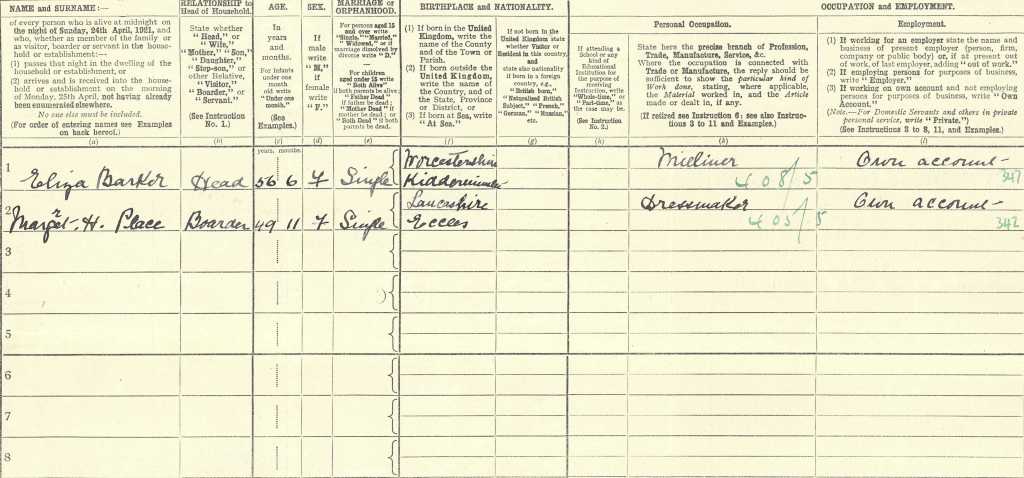
Number 205 Monton Road traversed the very masculine world of plumbing and ironmongery, to the more women-centred professions of millinery and dressmaking, no doubt bringing a different demographic of Monton residents through their doors.
At the time of the 1921 census, Miss Eliza Barker (aged 56) is living and running her millinery (hat-making) business as Head of Household at 205 Monton Road, alongside a dressmaker and her boarder, Margaret H. Place (aged 49). They are both independent business women, neither is married, and they are registered as working on their “own account”, meaning they are self-employed people. Women’s financial independence, either as an opportunity or necessity, had of course surged after the Great War.
As with the former ironmongery business, it seems the business was enough of a success to be taken over and continued. In 1929, Miss Ethel Holden is registered as the new milliner, keeping women in business at 205 Monton Road.
Margaret
‘We used to have a joke: Salford is a nice place to have come from!’
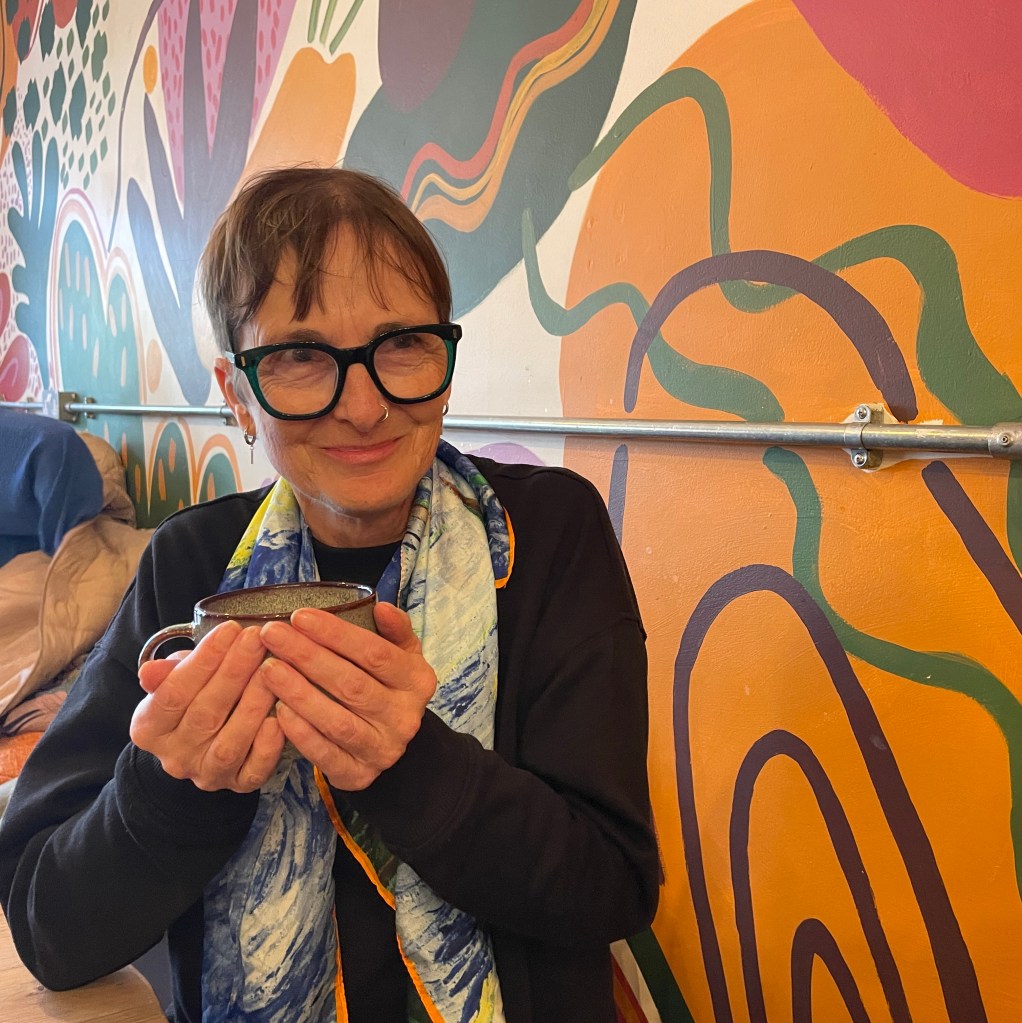
Almost the first thing Margaret tells me is this cracking one-liner. Margaret is allowed to share a joke like this since she is born and raised in Salford. She grew up in a classic brick terrace over in the Islington Mill area of the city, around James Street and Chapel Street, though her original family home, and the street it stood on, no longer exist due to layers of regeneration. It was once a very ordinary working class place to live. ‘We thought Regent’s Road was fancy!’ she laughs. She tells me about tricks that the kids would play on residents using the shared outdoor loos, the freedom and play.
Margaret is out celebrating her niece’s birthday, while her daughter Sarah is working the bar, so it’s a family affair at Oats and Honey this evening. Margaret has already got stuck into the Salford centenary celebrations. The night before she’s been to see ‘We Are Salford – Celebrating 100 Years of Women Through Comedy’ at Salford Arts Theatre – and loved it. She is joyously friendly and it’s contagious. ‘I think Mum had a lot of fun in the 60s,’ Sarah hints. ‘Ask her about the Hi-Fi Club!’ Alas the party gets in full swing and I don’t get around to it. Definitely next time!
James
‘I love it here.’
James is a bit more of a genuine newcomer to Salford. He’s a doctor whose work means that he must attend a different hospital every six months. Salford, and this neighbourhood in particular, has proved to be the perfect base for his working life. Hailing from the Midlands originally, he lives nearby with his wife, currently away in London seeing Olivia Rodrigo. Today James is with his brother who’s visiting from Liverpool. Oats & Honey is a spot he always appreciates dropping into for a coffee. How have you settled into the neighbourhood? I ask him. I love it here, he says. His gorgeous grey Staffordshire bull terrier Velma loves it too. ‘Especially the park.’ Who could blame her?
Jenni
‘Salford is still Salford after all this time.’
I intercept Jenni as she’s knitting something on the bench next to me. ‘Socks,’ she says. ‘For me!’ Jenni came to live in Salford in 1992, moving via London and then North Devon, having first encountered the city back in the late 1970s while visiting some friends here. She jokes after 30-plus years she’s still a ‘newcomer’. We agree that parts of the city have changed beyond recognition, but overall, here in the heart of things, Jenni believes that ‘Salford is still Salford after all this time. It has an identity that is solid and quite unique.’ For many years Jenni’s professional life was all about helping people get back into work after experiencing unemployment, while her partner supports the welfare of students at the university, embedding them both in the public life and well-being of their communities. Amongst other things, Jenni volunteers in the costume department at Barton Theatre Company, who produced their own project for the Salford Centenary.
The old neighbourhood and third spaces
Interviewing folks and delving into archives gave me a fascinating sense of place that exists on Monton Road. Some think of it as quintessentially Lancashire, others as very Salfordian, some think of it as city, others as suburbs, some say it’s Eccles, others Monton Village. In former times the Ward of the neighbourhood was ‘North East’, its Parliamentary Division was ‘Eccles Pb’, and the Registration District ‘Barton Upon Irwell’. Whatever we name it, in and around this always bustling neighbourhood there were once mills, other pubs, churches that are busier than today, more green space, the Princess Cinema, the old grandeur of the Park Hotel, veteran’s homes, and of course the waterways that still flow.
What’s really important, as I realised, is the presence of third spaces in our lives. In only a couple of days I encountered group meet ups and solo crafting, friend reunions and family celebrations, dozens of beloved dogs meeting one another and breaking the ice for their owners to chat, people making music and writing, some getting away from it all, some getting into the party. And all under one roof, the old ironmonger’s place, the former dressmaker shop, the plumber who became a pilot. Independent spaces outside our homes give us quality of life in numerous ways. So let’s support them. And talk to people. I recommend it. Bring a book or buy a bottle. Let’s keep city life thriving for at least the next 100.
Return to all artworks from Trails, Pales and Centenary Tales here.

